
Introduction: Why Snake Plant is Perfect for Everyone
Snake Plant (Sansevieria) is one of the easiest and most reliable indoor plants. It is ideal for beginners, busy professionals, and anyone who wants greenery with minimal effort. This pillar page explains everything you need to know about Snake Plant care and growing, step by step, in a practical and user-first way.
What is Snake Plant (Sansevieria)?
Snake Plant is a hardy indoor plant known for its upright, sword-like leaves. It belongs to the Sansevieria group (now classified under Dracaena) and is popular for homes, offices, bedrooms, and shops due to its low maintenance nature.
Why Choose Snake Plant for Home or Office
- Extremely low maintenance
- Survives in low light and artificial light
- Requires less watering
- Long lifespan
- Improves indoor air quality
- Suitable for Indian climate
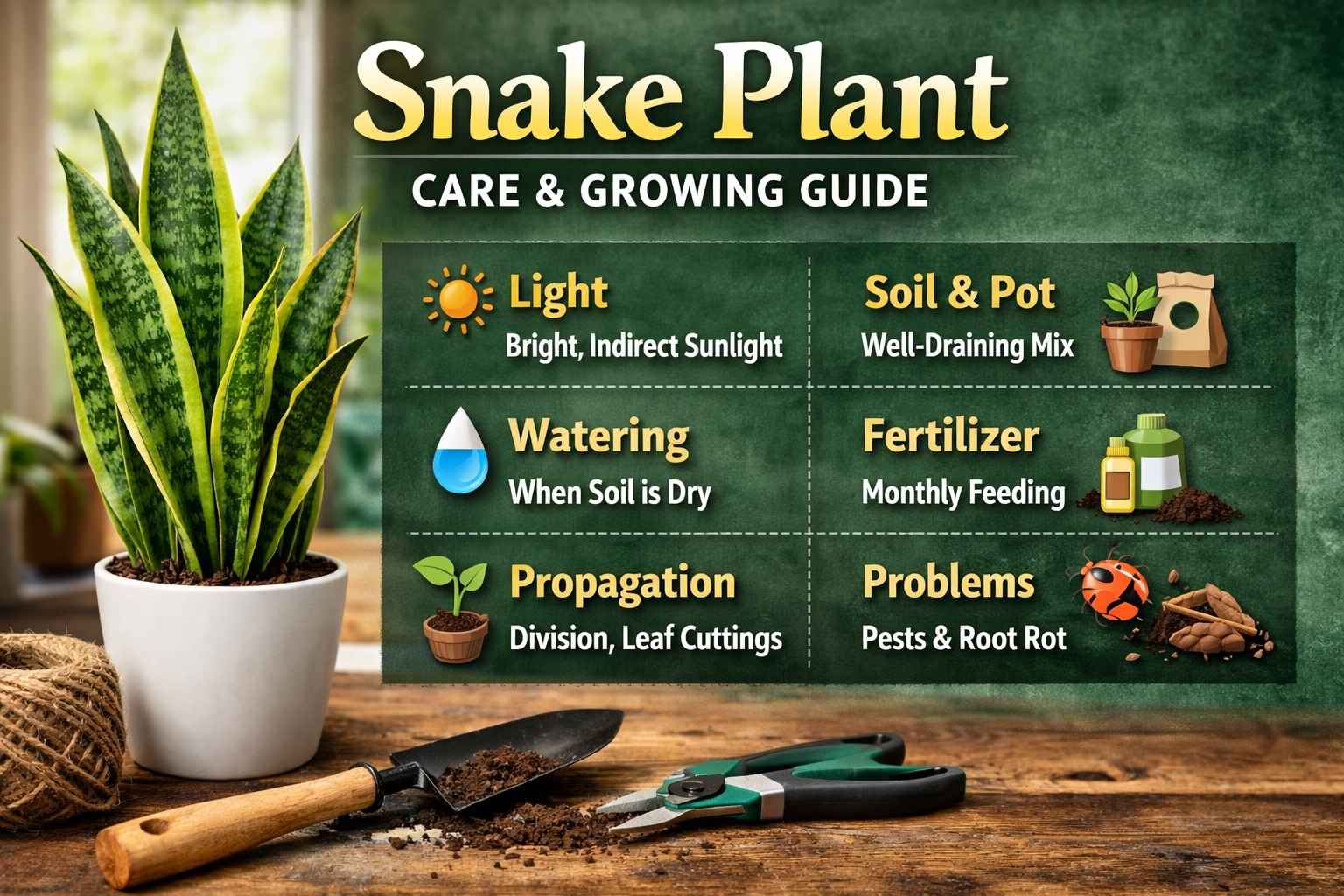
Snake Plant Light Requirements
Snake Plant adapts well to different lighting conditions.
Best Light Conditions
- Bright indirect sunlight (ideal)
- Can survive in low light
- Avoid harsh direct sunlight for long hours
Tip: If leaves lose color, move the plant to a brighter spot.
Snake Plant Watering Guide
Overwatering is the most common mistake.
How Often to Water
- Water only when soil is completely dry
- Summer: once every 7–10 days
- Winter: once every 15–20 days
Signs of Overwatering
- Yellow leaves
- Soft or mushy base
- Bad smell from soil
Best Soil Mix for Snake Plant
Good drainage is essential.
Ideal Soil Mix
- 40% garden soil
- 30% sand or perlite
- 30% compost or cocopeat
Avoid heavy clay soil that holds water.
Best Pot for Snake Plant
- Pots with drainage holes only
- Clay or ceramic pots are best
- Slightly tight pots encourage better growth
Avoid decorative pots without drainage.
Fertilizer for Snake Plant
Snake Plant needs very little feeding.
Fertilizer Schedule
- Liquid fertilizer once a month (spring–summer)
- Vermicompost or cow dung compost works well
- No fertilizer needed in winter
Snake Plant Temperature & Climate
- Ideal temperature: 18°C – 35°C
- Protect from extreme cold
- Suitable for Indian indoor conditions
Snake Plant Propagation Methods
1. Division Method (Best & Fastest)
- Remove plant from pot
- Separate roots carefully
- Plant in fresh soil
2. Leaf Cutting Method
- Cut healthy leaf
- Let it dry for 24 hours
- Plant in well-drained soil
Common Snake Plant Problems & Solutions
Yellow Leaves
Cause: Overwatering Solution: Reduce watering, improve drainage
Root Rot
Cause: Waterlogged soil Solution: Repot in dry soil, remove rotten roots
Slow Growth
Cause: Low light or no nutrients Solution: Move to brighter area, light feeding
Pruning & Maintenance Tips
- Remove damaged or yellow leaves
- Clean leaves with damp cloth
- Rotate pot occasionally for even growth
Indoor Placement Ideas
- Bedroom corner
- Living room
- Office desk
- Near entrance door
- Shaded balcony
Is Snake Plant Safe for Pets?
Snake Plant is mildly toxic if ingested.
- Keep away from cats and dogs
- Place out of reach of children
Snake Plant Care Tips for Beginners
- Less water is better
- Always use well-drained soil
- Do not over-fertilize
- Avoid frequent repotting
Internal Linking Structure
Primary Internal Links
Supporting Internal Links
❌ click here, read more ✅ snake plant care guide, low maintenance indoor plants, best indoor plants for beginners
Frequently Asked Questions (FAQs)
How often should I water Snake Plant?
Water only when soil is fully dry. Overwatering is harmful.
Can Snake Plant grow in low light?
Yes, it survives well in low light but grows better in indirect sunlight.
Does Snake Plant need fertilizer?
Very little. Once a month during growing season is enough.
Is Snake Plant good for bedroom?
Yes, it is one of the best indoor plants for bedrooms.
You May Also Like

Snake Plant Buying Guide & Commercial Intent – Complete GuideSnake Plant Buying Guide & Commercial Intent – Complete Guide
Introduction Snake Plant is one of the most searched and sold indoor plants in India. Buyers often ask practical questions ...

Snake Repellent / Anti-Snake Plants – Complete GuideSnake Repellent / Anti-Snake Plants – Complete Guide
Introduction Fear of snakes is common, especially in villages, farmhouses, gardens, and ground-floor homes. Because of this, many people search ...
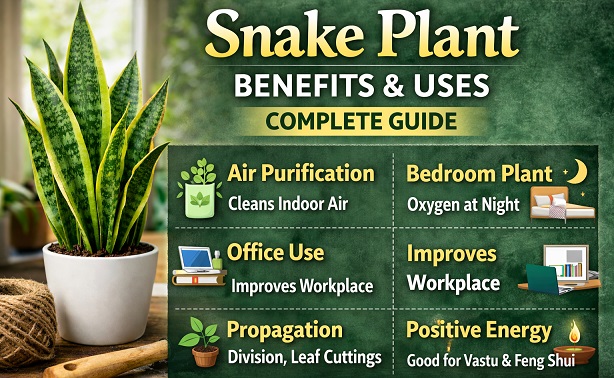
Snake Plant Benefits & Uses | Air Purifying, Bedroom & Vastu Plant GuideSnake Plant Benefits & Uses | Air Purifying, Bedroom & Vastu Plant Guide
What is Snake Plant (Sansevieria)? Snake Plant, scientifically known as Sansevieria (now classified under Dracaena), is one of the most ...