Introduction
Fear of snakes is common, especially in villages, farmhouses, gardens, and ground-floor homes. Because of this, many people search for snake repellent plants or anti-snake plants that can help keep snakes away naturally.
This pillar page explains the truth, science, and practical reality behind snake-repellent plants-what works, what doesn’t, and how plants can be used as part of a preventive strategy, not false promises.
Do Snake Repellent Plants Really Work?
The honest answer: No plant can guarantee 100% snake repellent results.
However, certain plants:
- Create strong smells snakes dislike
- Disturb snake movement or shelter
- Reduce rodents (snakes’ food source)
Plants work best as supportive prevention, not as a standalone solution.
Why Snakes Enter Homes or Gardens
Understanding this is more important than plants alone:
- Presence of rats or frogs
- Water sources nearby
- Tall grass or clutter
- Dark, undisturbed areas
If these factors are controlled, snake visits reduce significantly.
Commonly Known Anti-Snake Plants
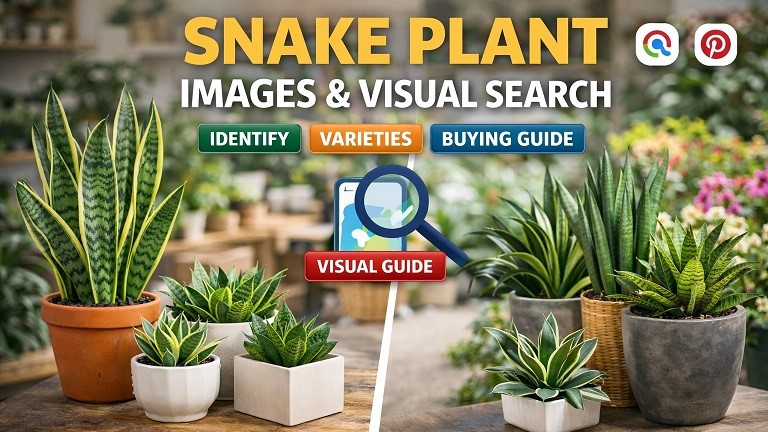
Snake Plant (Sansevieria)
- Upright, sharp leaves
- Creates physical discomfort for snakes
- Useful near boundaries and walls
- Also low maintenance and indoor-friendly
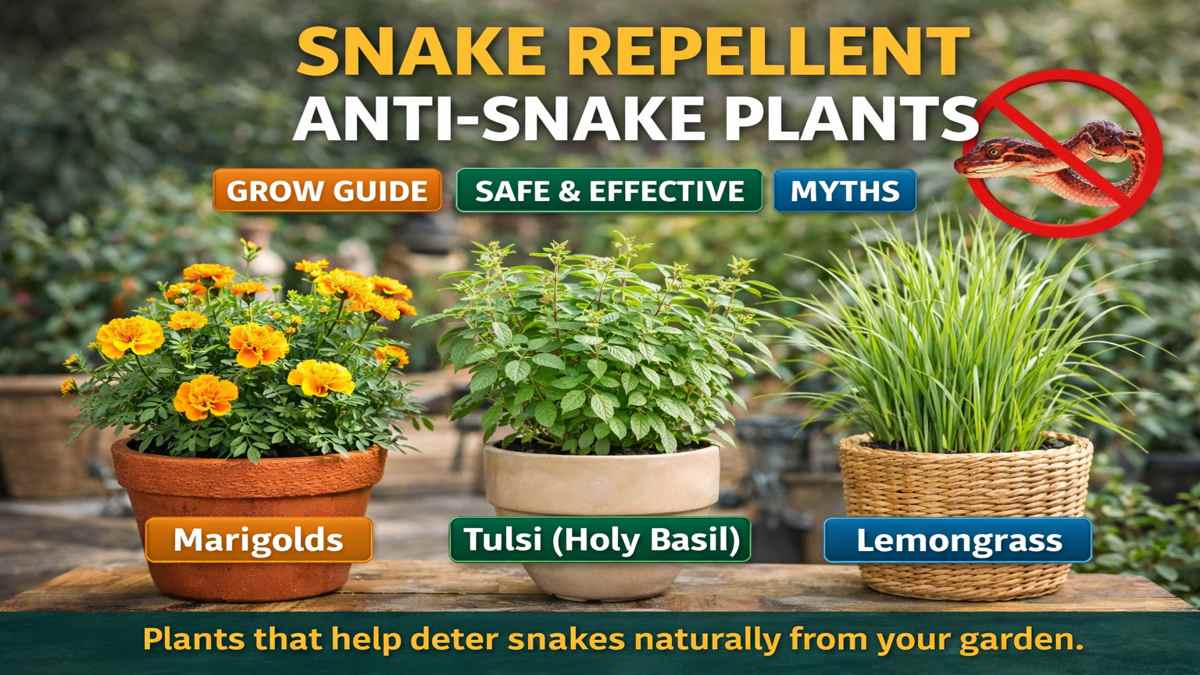
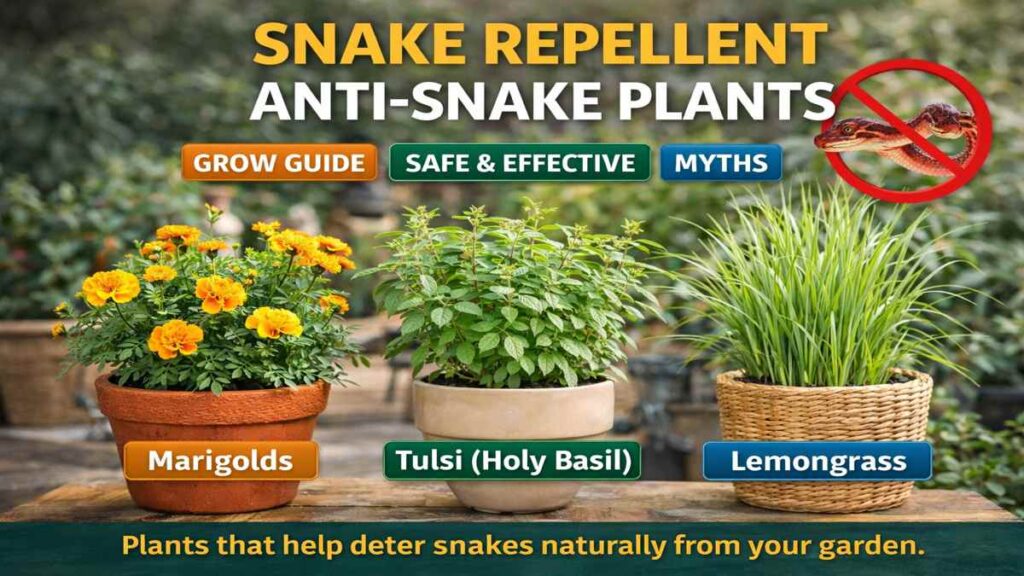
Lemongrass Plant
- Strong citrus smell
- Snakes dislike intense fragrance
- Best for outdoor borders
Marigold Plant
- Strong root smell
- Helps repel insects and rodents
- Used in farms and gardens
Garlic Plant
- Sharp odor
- Often used in rural prevention methods
- More effective when combined with cleanliness
Tulsi (Holy Basil)
- Aromatic plant
- Considered protective in traditional belief
- Limited scientific proof but widely used
Plants That Help Indirectly Against Snakes
Some plants don’t repel snakes directly but help by:
- Reducing insects and rats
- Improving open visibility
- Keeping soil dry
Examples include:
- Mint varieties
- Rosemary
- Chrysanthemum
Best Places to Plant Anti-Snake Plants
- Boundary walls
- Near drains (not blocking water flow)
- Garden edges
- Around storage areas
- Near compound entry points
Avoid overcrowding, as dense plants can create hiding spots.
Snake Plant as an Anti-Snake Plant (Truth Explained)
Snake Plant is often linked to snake repellent claims because:
- Leaves are stiff and pointed
- Dense clusters are uncomfortable for snakes
Reality:
- Snake Plant does not emit chemicals that repel snakes
- It works only as a physical barrier, not a repellent
Still, it is useful due to:
- Easy care
- Long lifespan
- Indoor + outdoor use
Myths About Snake Repellent Plants
Myth 1: One Plant Can Stop All Snakes
❌ False. No plant offers guaranteed protection.
Myth 2: Snake Plant Smell Repels Snakes
❌ Snake Plant has no strong odor.
Myth 3: Anti-Snake Plants Replace Safety Measures
❌ Plants must be combined with cleanliness and pest control.
Practical Snake Prevention Tips (More Important Than Plants)
- Keep surroundings clean
- Remove garbage and wood piles
- Control rats and rodents
- Seal wall gaps and drains
- Maintain short grass
Plants should support these steps, not replace them.
Snake Repellent Plants for Different Areas
For Home Garden
For Farms & Open Land
- Lemongrass rows
- Garlic plantations
- Clear boundaries
For Indoor Safety
- Snake Plant (decor + barrier near doors)
Suggested Internal Links
- Snake Plant Care & Growing Guide
- Snake Plant Benefits & Uses
- Snake Plant Vastu & Direction Guide
- Snake Plant Varieties & Types
Frequently Asked Questions
Which plant repels snakes the most?
No plant fully repels snakes. Lemongrass and marigold may help reduce snake activity.
Is Snake Plant really an anti-snake plant?
Snake Plant acts as a physical barrier but does not chemically repel snakes.
Can plants alone keep snakes away?
No. Cleanliness and pest control are more effective.