
Snake Plant Varieties & Types – Complete Identification Guide
Snake Plant, botanically known as Sansevieria (now classified under Dracaena), is one of the most popular indoor plants in the world. Its hardy nature, air-purifying ability, and striking leaf patterns make it a favorite for homes, offices, and commercial spaces.
This guide helps you identify, choose, and understand different snake plant varieties, whether you are a beginner, collector, or nursery owner.
What You’ll Learn in This Guide
- Different types of snake plants with names
- Visual identification tips
- Growth pattern and size differences
- Best varieties for home and office
- Rare and decorative snake plant types
- Care differences between varieties
Understanding Snake Plant Classification
Snake plants are commonly grouped based on:
- Leaf shape (tall, cylindrical, compact)
- Leaf color and variegation
- Growth habit (upright or rosette)
- Indoor or outdoor suitability
Popular Snake Plant Varieties
Sansevieria Trifasciata (Mother-in-Law’s Tongue)


Key Features
- Tall, sword-like green leaves
- Dark green horizontal bands
- Extremely low maintenance
Best For
- Beginners
- Bedrooms and living rooms
Sansevieria Laurentii


Key Features
- Yellow edges with green center
- Upright, architectural look
- One of the best air-purifying varieties
Best For
- Indoor decor
- Office spaces
Sansevieria Zeylanica

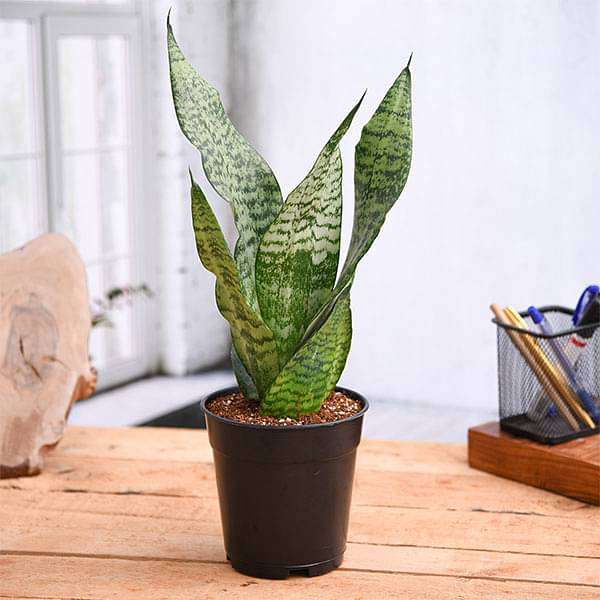
Key Features
- Narrow leaves with wavy patterns
- Darker green tone than trifasciata
- Slower growth
Best For
- Minimalist interiors
- Low-light areas
Dwarf Snake Plant Varieties
Sansevieria Hahnii (Bird’s Nest Snake Plant)


Key Features
- Compact rosette growth
- Short, broad leaves
- Ideal for table tops
Best For
- Small apartments
- Office desks
Golden Hahnii


Key Features
- Yellow and green variegation
- Decorative and slow-growing
- Needs brighter light to maintain color
Cylindrical Snake Plant Varieties
Sansevieria Cylindrica


Key Features
- Round, spear-shaped leaves
- Can be braided or fan-shaped
- Very drought tolerant
Best For
- Modern interiors
- Statement plant decor
Sansevieria Boncel


Key Features
- Short, thick cylindrical leaves
- Star-shaped rosette
- Slow-growing and compact
Rare and Decorative Snake Plant Types
Sansevieria Moonshine


Key Features
- Silvery-grey leaves
- Smooth texture
- Color fades in low light
Sansevieria Fernwood


Key Features
- Thin, spiky leaves
- Bushy growth pattern
- Hybrid variety
Snake Plant Varieties Comparison Table
| Variety | Size | Light Need | Growth Speed |
|---|---|---|---|
| Trifasciata | Tall | Low–Bright | Medium |
| Laurentii | Tall | Medium–Bright | Medium |
| Hahnii | Small | Medium | Slow |
| Cylindrica | Medium | Low–Bright | Slow |
| Moonshine | Medium | Bright Indirect | Slow |
Best Snake Plant Varieties for Home Use
- Hahnii for small spaces
- Laurentii for living rooms
- Trifasciata for bedrooms
- Cylindrica for modern decor
Internal Link:
Anchor Text: complete snake plant care guide
Target Page: Snake Plant Care Guide
Choosing the Right Snake Plant Variety
When selecting a variety, consider:
- Available space
- Light conditions
- Decorative preference
- Maintenance level
Internal Link:
Anchor Text: low maintenance indoor plants
Target Page: Low Maintenance Plants Page
Frequently Asked Questions
Which snake plant variety is best for beginners
Sansevieria Trifasciata and Laurentii are the easiest to grow.
Are all snake plant varieties air purifying
Yes, most varieties help improve indoor air quality.
Do variegated snake plants need more light
Yes, brighter indirect light helps maintain leaf color.

1 thought on “Snake Plant Varieties & Types: Complete Guide to Sansevieria Plants”